Invisalign®



Discover a modern, low-profile way to straighten teeth without metal brackets or wires. Invisalign® uses a sequence of custom clear trays to move teeth gradually, offering many people an effective path to a more aligned smile while fitting into everyday life.
One of the most appealing aspects of clear aligner therapy is how little it interrupts daily activities. Aligners are removable for eating, brushing and important social moments, which means you don’t have to change your diet or adopt a complicated cleaning routine. That flexibility is especially useful for adults and teens who need orthodontic results without the constant attention required by fixed appliances.
Because the trays are nearly transparent, they are discreet in photos and public settings. That discretion doesn’t come at the expense of control: modern aligner systems use precise staging to move teeth in small, predictable increments. The result is a balance of aesthetics, comfort, and predictable mechanics that many patients find appealing.
At Skyline Smiles, we emphasize a practical, stepwise approach to care. Clear aligners work best when worn consistently, and our role is to pair the right technology with a treatment plan that fits your lifestyle and oral health needs.
Today’s aligner therapy depends on digital workflows. A fast digital scan replaces messy impressions, producing a highly accurate three-dimensional model of your teeth. From that model we map each stage of movement so the entire plan, from initial tooth positions to the intended outcome, is visible before any aligners are made.
This upfront visualization helps both the clinician and patient understand expected changes. Clinicians can refine tooth movements, anticipate attachments, and plan for interproximal reduction (if needed) to create room for alignment. For patients, seeing a step-by-step preview removes much of the uncertainty that once accompanied orthodontic care.
Because the plan is driven by data and software, adjustments are easier to coordinate as treatment progresses. Regular check-ins let us monitor results and tweak the approach when the clinical situation calls for it, keeping care responsive rather than fixed to an initial estimate.
Treatment begins with an initial exam and a conversation about goals. We assess tooth alignment, bite relationships, and any underlying dental concerns that should be addressed before moving teeth. If clear aligners are appropriate, your clinician captures a digital scan and outlines a proposed plan that shows how teeth will move over time.
Once the treatment sequence is finalized, a series of custom aligners is manufactured for your case. Each tray is worn for a set period before being replaced by the next in the series. Periodic appointments, usually spaced several weeks apart, let us evaluate progress, make small corrections if necessary, and deliver additional aligners as you move forward.
Because aligner therapy depends on consistent wear, we also discuss expectations up front: how long to wear each tray during the day, hygiene practices, and ways to handle travel or special events. The goal is to keep treatment predictable while fitting it into a realistic daily routine.
Clear aligners are well-suited to address a broad range of alignment issues including mild to moderate crowding, spacing, and many bite irregularities. They are particularly popular for adults seeking cosmetic improvement without the visibility of traditional braces, and for teens who need an option that fits an active schedule.
That said, every mouth is unique. Some complex bite problems or severe jaw discrepancies are best managed with a combination of treatments or traditional orthodontic approaches. During your evaluation we’ll be transparent about expected outcomes and recommend the option that offers the most reliable, long-term result.
Part of our planning includes assessing teeth, gums, and overall oral health to ensure that moving teeth is appropriate at the time of treatment. When other dental concerns need attention first, we coordinate care so alignment proceeds on a healthy foundation.
Maintaining aligners is straightforward but important. Rinse trays after meals, brush them gently with a soft brush, and avoid exposing them to hot water or abrasive cleaners. Good oral hygiene, regular brushing and flossing, prevents staining and helps keep both teeth and aligners in the best possible condition.
Because teeth can shift after treatment, retainers are a key part of preserving results. We will discuss retention options and schedules that fit your lifestyle so the improvements you gain from treatment remain stable. Retention is not a one-size-fits-all prescription; it’s an individualized plan that follows the same careful reasoning used to design the active phase of care.
Finally, aligning teeth works best when combined with routine preventive dentistry. Regular exams and cleanings not only protect the health of your teeth and gums during treatment, they also support a lasting outcome once active alignment is complete.

Your first visit gives us a chance to review goals, examine your mouth, and determine whether clear aligners are the right fit for your needs.

A digital scan produces a three-dimensional model we use to plan each stage of movement. This plan clarifies the steps and outcomes before treatment begins.
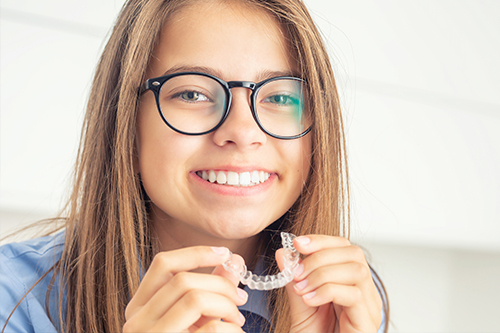
Each aligner is produced to match the planned sequence of tooth movement, with comfort and fit considered at every stage.

Periodic check-ins help ensure progress stays on track, and a tailored retention plan protects your results after active treatment ends.
Learn more about the patient experience and the practical benefits of aligner therapy in these short videos
Whether you’re looking for a discreet solution to mild crowding or a practical way to refresh your smile, Invisalign® represents a contemporary option that blends technology with patient-centered planning. If you’d like to learn how this treatment might apply to your situation, please contact our office for more information and to schedule a consultation.
*Invisalign® is a registered trademark of Align Technology, Inc.
Invisalign® is a system of custom, clear thermoplastic trays that gradually guide teeth into new positions through a planned series of small movements. Each tray is slightly different from the last, and wearing them in sequence produces predictable changes mapped out during digital treatment planning. The trays are removable, which allows patients to maintain normal eating and oral hygiene routines while treatment is active.
The treatment plan is created from a three-dimensional digital model of your teeth that shows each stage of movement from start to finish. This visualization helps the clinician identify where attachments, interproximal reduction, or other adjuncts may be needed to achieve the desired outcome. Regular clinical check-ins let the team monitor progress and make adjustments when necessary so the plan remains responsive to how your teeth actually move.
Invisalign® is well suited for many adults and teens who have mild to moderate crowding, spacing, or common bite irregularities such as overbite or underbite. Good candidates have healthy gums and teeth or are willing to address active dental issues like cavities or periodontal concerns before beginning alignment. Motivation to wear aligners as directed is a key factor in success, since consistent wear determines how closely treatment follows the planned movements.
Some complex skeletal or severely rotated cases may require traditional orthodontics or a combined approach with restorative dentistry or orthodontic surgery. During an evaluation, the clinician will review your bite, gum health and overall goals, then recommend the option that offers the most reliable long-term result. The goal is to match the right technology to each patient’s anatomy and expectations.
Preparation begins with a comprehensive dental exam to confirm that your teeth and gums are healthy enough for tooth movement, and to address any necessary restorative or periodontal care first. The clinician will take a detailed medical and dental history, photograph your smile and capture a fast digital scan that replaces traditional impressions. This scan becomes the basis for the treatment simulation and allows you to see the proposed sequence of changes before any aligners are made.
During the consultation you should discuss your goals, daily routine and any previous orthodontic work so the team can design a plan that fits your lifestyle. Expect a conversation about expected wear time, hygiene responsibilities and how aligners integrate with activities like sports or school. Clear communication at this stage reduces surprises and helps the clinician design a comfortable, realistic plan for your case.
Treatment usually begins with a digital scan and the creation of a staged treatment plan that maps desired tooth movements from the current position to the intended result. After you approve the plan, a series of custom aligners is made; each aligner is worn for a prescribed period before transitioning to the next. Periodic appointments, typically several weeks apart, allow the clinician to check progress, address attachments or refinements, and provide the next aligner sets.
Consistency is central to predictable results, so clinicians explain how many hours per day aligners should be worn and how to handle travel, meals and special events. If midcourse adjustments are needed, the digital plan can be revised and new trays manufactured to keep treatment on track. The emphasis is on steady, monitored progress rather than a one-size-fits-all timetable.
Daily care for aligners is simple but important: rinse trays after removing them, brush them gently with a soft brush and avoid hot water or abrasive cleaners that can warp or scratch the material. Maintain thorough oral hygiene by brushing and flossing before reinserting aligners to prevent staining, decay and gum irritation. Using nonabrasive cleaning products designed for retainers or clear trays can help keep aligners clear and odor-free.
Regular dental cleanings and exams remain essential during alignment to monitor gum health and catch any restorative needs early. If attachments or elastics are part of your plan, follow the clinician’s instructions for care and report any unusual sensitivity or fit issues promptly. Good daily habits protect both your teeth and the success of the alignment process.
Digital scans create an accurate three-dimensional model of your teeth that replaces messy impressions and allows precise mapping of each planned movement. Treatment software then simulates the entire course of alignment so clinicians and patients can preview expected results and make informed decisions before aligners are produced. This upfront clarity reduces uncertainty and helps the team anticipate where attachments or interproximal reduction may be necessary.
The software-driven workflow also makes midcourse corrections more efficient; if the clinical outcome differs from the simulation, the digital plan can be adjusted and new trays manufactured to refine movements. Overall, the integration of scanning and planning tools supports a level of predictability and personalization that benefits both clinician judgment and patient experience.
Invisalign® can address a wide range of bite problems including mild to moderate crossbites, open bites and deep bites, but some severe skeletal discrepancies or complex occlusal issues may require traditional braces or interdisciplinary care. During the evaluation we assess how teeth, jaws and facial structure interact and recommend the approach most likely to produce a stable, long-term result. When necessary, treatment can be coordinated with restorative dentists, oral surgeons or orthodontists to address complex needs.
Patients should expect an honest appraisal of what Invisalign® can and cannot achieve in their specific case. The clinician’s priority is a reliable outcome, so if a combined or alternative approach offers better long-term function and stability, that option will be explained clearly and respectfully. The planning process is designed around predictable, evidence-based decisions rather than a single technology preference.
After active alignment, the transition to retention is essential to preserve the new tooth positions; retainers are commonly provided in fixed or removable forms depending on the clinical needs. The clinician will recommend a retention schedule tailored to your case, which may include full-time wear initially followed by night-only wear to maintain stability. Regular follow-up checks help confirm that retention is effective and that any minor settling is addressed promptly.
Long-term success also depends on continued preventive dental care, including routine cleanings and exams to protect gums and teeth that support the corrected alignment. The retention phase is a planned extension of treatment rather than an afterthought, and the care team will provide clear instructions so your results remain predictable for years to come. Open communication about lifestyle habits that influence tooth position helps patients preserve their investment in alignment.
Our approach to aligner therapy emphasizes conservative, preventive decision-making and clear explanations so patients understand why a particular plan was recommended. We use digital scans and stepwise treatment planning to create individualized plans, and we coordinate care across our West Loop, Roscoe Village, Bucktown and Elmhurst offices to ensure consistency in execution and follow-up. The focus is on matching the right technology to each patient’s needs and monitoring progress closely through scheduled check-ins.
When additional dental treatment is required before or during alignment, the team organizes care so movement proceeds on a healthy foundation and outcomes remain predictable. We prioritize explanations and staged care so patients know what to expect at every visit rather than arriving with unanswered questions. This methodical, patient-centered workflow reflects our commitment to thoughtful treatment and long-term oral health.
Because aligners are removable, most patients find it easy to maintain their usual diet and speaking activities with only brief adjustments while trays are worn or removed. You will remove aligners for meals and cleanings, which preserves normal eating habits but also requires attention to hygiene to keep teeth and trays clean. Some patients notice a short adaptation period for speech when starting a new tray, but this typically resolves quickly as the mouth adjusts.
Aligners are well suited for active lifestyles, including sports and performances, provided wear-time guidelines are followed and the clinician’s instructions about appliance care are observed. For contact sports, a mouthguard may be recommended over or instead of aligners during play, and the care team can advise on timing for removal and safe protection. Overall, the goal is to integrate treatment into daily life with minimal disruption while maintaining the consistency that drives successful results.
Whether you are due for a cleaning or finally ready to fix something that has bothered you for years, the first step is the same. Pick the office nearest you and we will find a time that works.
