CEREC



Many patients value efficiency without sacrificing quality. A one-visit restoration with CEREC® is designed to streamline treatment while maintaining clinical standards: the preparation, digital impression, design, and milling happen during a single appointment so you leave with a finished restoration that’s ready to function immediately.
This approach reduces the number of visits required, which is especially helpful for busy schedules or for patients who prefer fewer transitions between appointments. It also removes the need for temporary crowns that can chip, dislodge, or feel different from your final restoration during the interim period.
Beyond convenience, single-visit restorations shorten the time a tooth spends vulnerable after preparation. That means less exposure to sensitivity or contamination and a smoother path to long-term function and comfort when the restoration is placed right away.

CEREC® replaces traditional putty impressions with a gentle intraoral scanner that captures a detailed 3D image of the prepared tooth and surrounding tissues. Patients typically find the scanning process faster and more comfortable than conventional impressions, with no gagging or long setting times.
Once the scan is complete, specialized software lets the dentist sculpt the restoration digitally. The virtual model can be refined in real time to ensure proper contours, contact points, and occlusion, resulting in a restoration tailored to how your teeth meet and function.
When the design is finalized, the plan is sent directly to an on-site milling unit that fabricates the restoration from a solid ceramic block. After final adjustments and a careful polish or staining to match neighboring teeth, the ceramic piece is bonded and checked for fit and bite, all within the same visit.
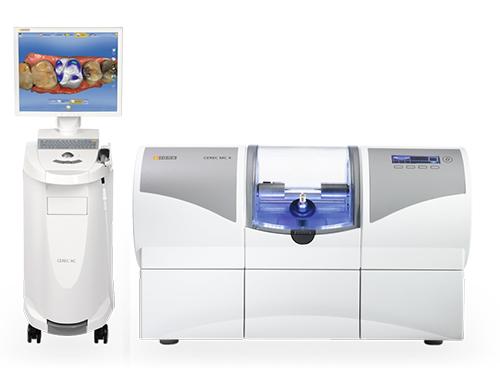
CEREC® is a CAD/CAM system, short for computer-aided design and computer-aided manufacturing, that translates precise digital scans into a physical restoration. The process removes much of the variability inherent to older workflows by using software-guided shaping and machine milling for consistent, reproducible results.
Because the restoration is created from a high-quality ceramic block, the material itself is biocompatible, stain-resistant, and engineered for strength. The software helps preserve as much healthy tooth structure as possible by guiding minimally invasive preparations that still deliver durable outcomes.
Digital records from a CEREC® appointment also become part of your chart. These files can be referenced later for adjustments or for designing future restorations, so your care benefits from both immediate results and a precise archival record.

The ceramics used with CEREC® are selected for their lifelike translucency and color range, which helps restorations integrate visually with adjacent teeth. With careful shading and finishing, a crown or onlay can be made to match enamel texture and surface characteristics, producing a pleasing and discreet result.
Functionally, contemporary ceramics are durable enough for most posterior and anterior restorations when bonded correctly. Proper bonding protocols and occlusal adjustments make the restoration comfortable in daily use, helping with chewing and speech while minimizing wear on opposing teeth.
Another advantage of a fully ceramic restoration is tissue friendliness. Ceramic surfaces are resistant to plaque buildup and are generally well-tolerated by gums, supporting a healthy oral environment around the treated tooth.
Your appointment starts with a focused assessment of the tooth: radiographs and a clinical exam let the dentist determine whether a crown, onlay, or inlay is the best solution. If CEREC® is appropriate, the tooth is prepared, and a digital scan is taken with a handheld wand. Most patients find this step quick and comfortable.
After the scan, the team designs the restoration together with you when needed, discussing shape and shade choices. The milling phase typically takes under an hour; while the machine works, your dentist finalizes the preparation and prepares the area for bonding. Once milled, the restoration is tried in, adjusted for a perfect bite, and then permanently bonded in place.
Recovery after a same-day crown is straightforward. Some mild sensitivity is common for a day or two as the tooth settles, but it usually resolves quickly. Because you leave with the finished restoration, there’s no need for a second appointment to seat a crown, and normal eating can resume as advised by the dentist.
At the office of Skyline Smiles, we view CEREC® as one more tool that helps deliver restorative care with clarity and convenience. If you’re curious whether a same-day crown or onlay is right for your situation, contact us for more information and to discuss what the treatment entails. Our team is happy to explain how the process works and whether it fits your goals for a healthy, natural-looking smile.
CEREC is a chairside CAD/CAM system that lets dentists design and mill ceramic restorations in a single appointment. It combines a digital intraoral scan, computer-aided design software, and an on-site milling unit to produce crowns, inlays, and onlays. Because everything happens in the office, the process removes the need for traditional putty impressions and lab turnaround.
Traditional workflows typically require provisional restorations, physical impressions, and a dental laboratory to fabricate the final piece over multiple visits. CEREC shortens that timeline by keeping design and fabrication under the dentist's direct control, which can reduce remakes and streamline communication. Digital records from the session also create a precise archive that can be referenced for future care.
At Skyline Smiles, a same-day CEREC appointment begins with a targeted exam and imaging to confirm that a crown, onlay, or inlay is the appropriate solution. The tooth is prepared and a gentle intraoral scanner captures a high-resolution 3D image of the area rather than using traditional impression materials. This scan is used to design the restoration chairside while the milling unit fabricates the ceramic piece.
While the mill runs, the dentist will refine contours and prepare the tooth for bonding so the restoration can be seated immediately after finishing. The team adjusts contacts and occlusion, completes any staining or polishing, and bonds the restoration in place before you leave. Mild sensitivity for a day or two is common as the tooth settles, but most patients return to normal function quickly without a second appointment.
CEREC is commonly used to make single-unit crowns, onlays, and inlays for both anterior and posterior teeth. The system can also be used for some veneer preparations and small custom restorations depending on the case complexity. More complex prosthetics, such as multi-unit bridges or extensive implant-supported work, often benefit from laboratory collaboration and may not be ideal for chairside fabrication.
The suitability of a given restoration depends on factors like remaining tooth structure, occlusion, and esthetic demands, which your dentist will evaluate. CEREC excels when precision, color-matching, and a conservative preparation are priorities for a single tooth. If additional laboratory steps are necessary, your dentist will explain the reasons and present alternatives.
Good candidates for CEREC restorations are patients who need single-tooth restorations and have sufficient healthy tooth structure to support a bonded ceramic piece. Patients with controlled periodontal health and manageable bite forces typically experience the best outcomes. Severe bruxism, extensive decay, or teeth requiring complex structural build-up may require alternative approaches or protective measures.
Age alone is not a limiting factor, but clinical stability and the ability to follow postoperative care are important considerations. Your dentist will review your medical and dental history, take necessary radiographs, and discuss whether a chairside restoration is appropriate for your goals. If CEREC is not the right choice, the practice will recommend other evidence-based options tailored to your situation.
CEREC restorations are milled from high-quality ceramic blocks, commonly including materials such as lithium disilicate and advanced glass ceramics. These ceramics are biocompatible, resistant to staining, and engineered to provide a natural translucency that mimics tooth enamel. When bonded correctly, modern ceramics offer strong mechanical performance suitable for many anterior and posterior restorations.
Laboratory-grade finishing, customized staining, and glazing enhance esthetics and help match adjacent teeth for a seamless result. Because ceramics are inert, they are generally gentle on surrounding gum tissue and less prone to plaque accumulation than some restorative materials. Your dentist will select the material that best balances strength and esthetics for your specific restoration.
The longevity of a CEREC restoration depends on oral hygiene, occlusion, material selection, and habits such as grinding or chewing on hard objects. With proper care and routine dental visits, many ceramic restorations provide durable service for years, although individual results vary. Regular checkups allow the dentist to monitor margins, contacts, and opposing teeth so small issues can be addressed before they become larger problems.
Care recommendations include daily brushing with a fluoride toothpaste, flossing, and avoiding excessive forces that could chip or fracture the restoration. If you have bruxism, a night guard or other protective measures may be advised to preserve the restoration's integrity. Follow-up appointments will let your team polish, adjust, or repair a restoration if minor changes are needed over time.
Patients commonly report that chairside restorations feel comfortable because the permanent piece is fitted and bonded in a single visit without a removable temporary. Because the restoration is designed to match contours and occlusion precisely, many experience fewer adjustments after insertion. Any immediate sensitivity is usually mild and short-lived as the tooth recovers from preparation.
Contemporary ceramic materials offer lifelike translucency and color options that allow skilled clinicians to produce natural-looking results. Staining, glazing, and polishing techniques further refine surface texture and sheen to blend with neighboring teeth. When shade and morphology are planned with care, a CEREC restoration can be visually indistinguishable from natural enamel.
Digital intraoral scanning captures precise three-dimensional data of the prepared tooth and surrounding tissues, improving the accuracy of the final restoration. The digital file eliminates distortions that can occur with traditional impression materials and enables immediate evaluation and refinement. Real-time visualization helps the clinician address fit, contacts, and margin design before milling begins.
Software-guided design workflows allow consistent control over occlusion and contact points that are critical for comfortable function. When adjustments are needed, the digital model can be modified quickly and the restoration re-milled without the delay of shipping to an external laboratory. The result is often fewer remakes and a closer fit at the time of seating, which benefits long-term performance.
Digital scans and design files from a CEREC visit become part of the patient record and can be referenced for future restorations or repairs. These records make it easier to reproduce or modify a restoration if adjustments are required later or if the tooth needs additional treatment. Keeping accurate digital archives supports continuity of care across visits and among clinicians within the practice.
If a restoration needs to be remade, the archived design can often be adapted rather than starting from scratch, saving chairtime and improving predictability. Patients should discuss record-keeping practices and privacy policies with their dentist if they have specific questions about how digital files are stored. Routine backups and secure storage protocols help preserve these records as part of your ongoing dental care.
To determine whether a same-day CEREC crown is right for you, schedule a consultation at the Skyline Smiles office nearest you so a clinician can perform a focused exam. During that visit the dentist will review your dental history, take any needed radiographs, and discuss the pros and cons of chairside fabrication based on your clinical situation. This personalized assessment ensures the chosen approach aligns with your functional needs and esthetic goals.
If CEREC is appropriate, the team will explain each step of the procedure and what to expect during and after the appointment so you can make an informed decision. If an alternative is recommended, the practice will outline evidence-based options and the reasons for suggesting them. If you have questions about the process or want to see examples of materials and shades, ask during your consultation so the team can address your concerns directly.
Whether you are due for a cleaning or finally ready to fix something that has bothered you for years, the first step is the same. Pick the office nearest you and we will find a time that works.
